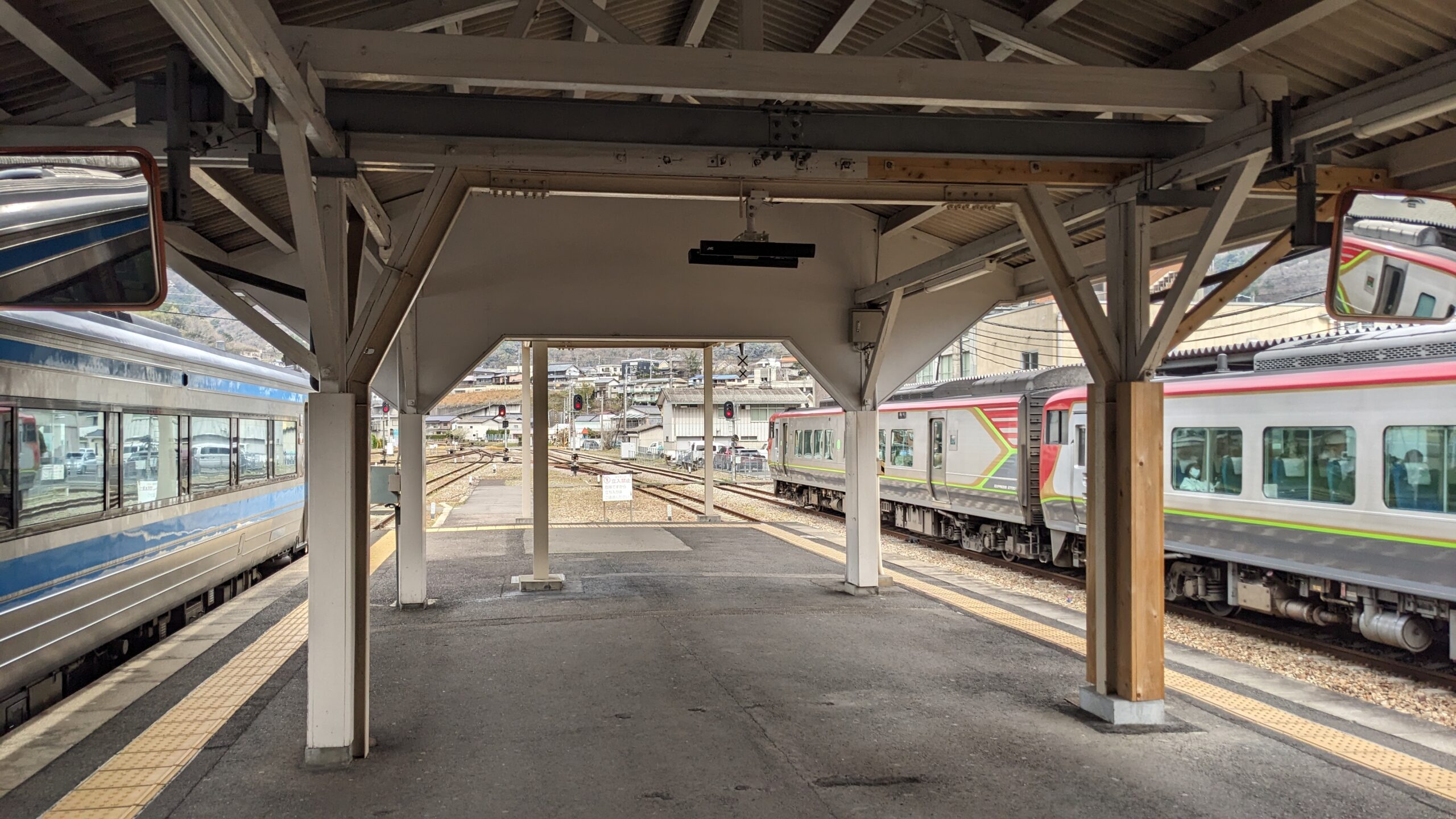
Of course, Japan is famous for its trains. They are wonderful, to be sure. They are fast, on time, and convenient.
But the urban electrified train lines are not all there is to see. Some of the most beautiful scenery can be seen only on trains that are, well, not so convenient.
And that is alright! You just need to know how to get on and off of them, and enjoy the ride while on them. The “wan-man ressha” (One-man, or single-driver, trains) often have been designed to handle the severe shortage of train company workers.
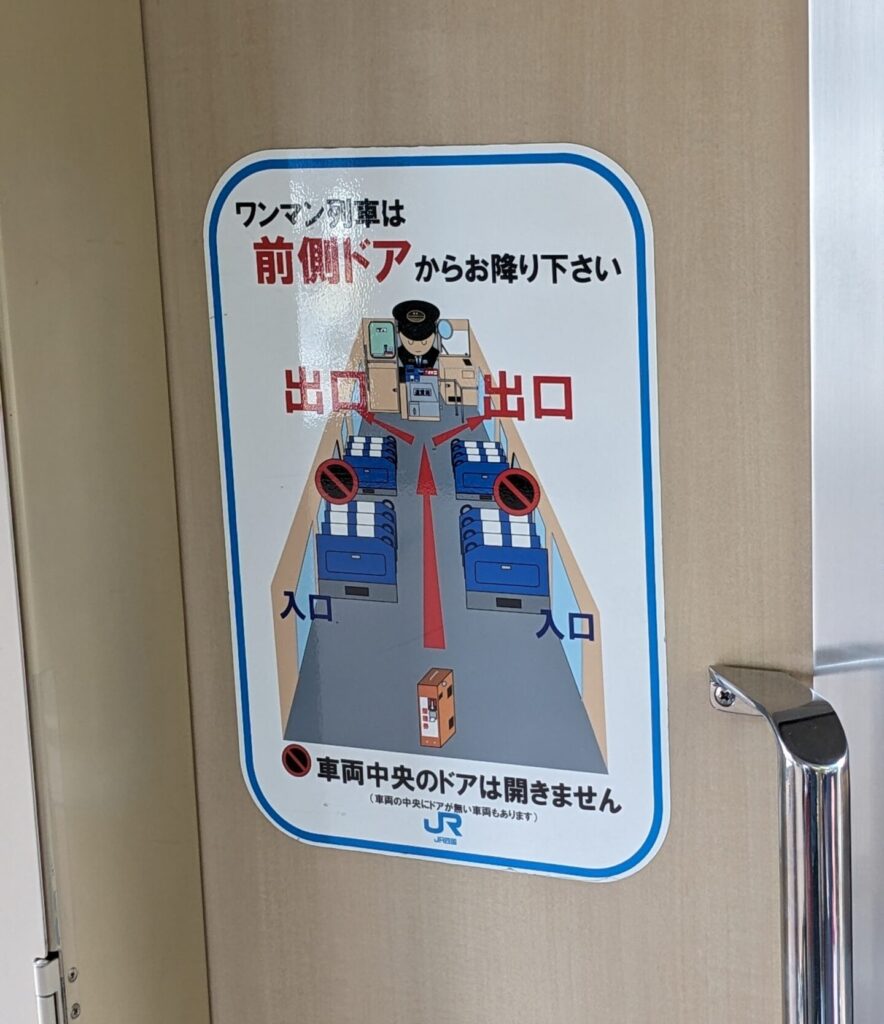
Here is a diagram with the basic idea: You enter the doors toward the back of the train (入口=ENTRANCE) and take a “ticket” printed with information about the station where you got on. When you get off, go up to the front of the train and give your “ticket” to the driver or put it in the payment device there, and put in the cash before getting off.
You may need EXACT CASH, so have 100- and 10-yen coins ready!
There are also other setups, such as taking your ticket and payment off the train to give to a station worker before exiting (no automated ticket gate). I recently had to pay by putting my ticket in a small plastic basket the worker held, and then hand my cash to him.
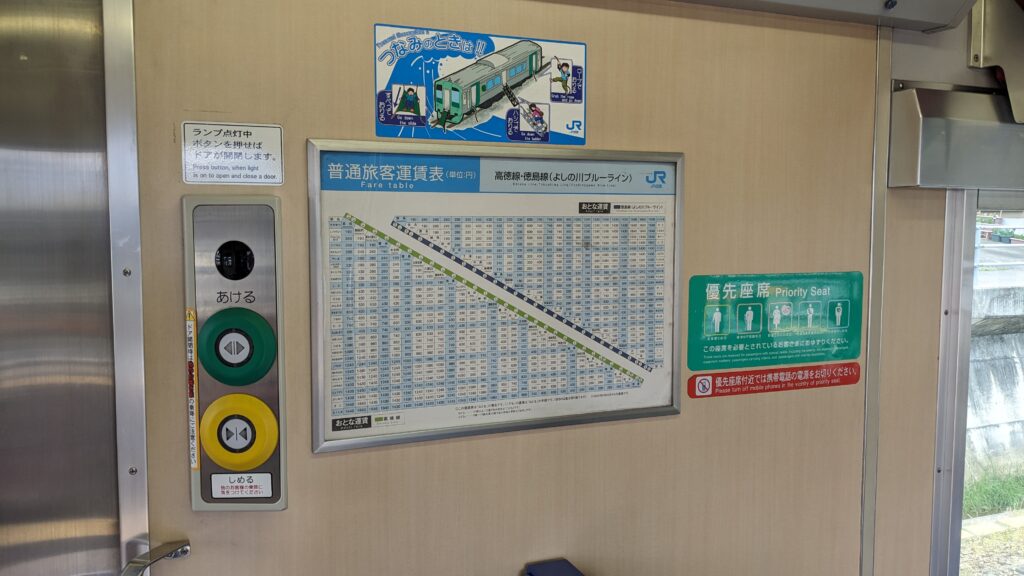
Notice the buttons with the arrows. When the train has come to a stop and the driver unlocks the doors, a light (the black circle here) turns on, showing you may open the door. Push the button with arrows (triangles) pointing outward (OPEN; here, encircled in green). If you happen to enter such a door and want to close the door to keep the inside air conditioned, push the button with arrows (triangles) pointing inward (CLOSE; here, encircled in yellow).
To the right of those buttons above is a fare chart. The train stations could be written only in Japanese, so either figure out ahead of time what your departure and destination stations’ characters look like, or research the price ahead of time so you have the right cash. Again, do not be caught without cash! Sometimes you can find an exchange machine (e.g. you can put in 1,000 yen bills to get 100- and 10-yen coins) on board, or perhaps at the train station.
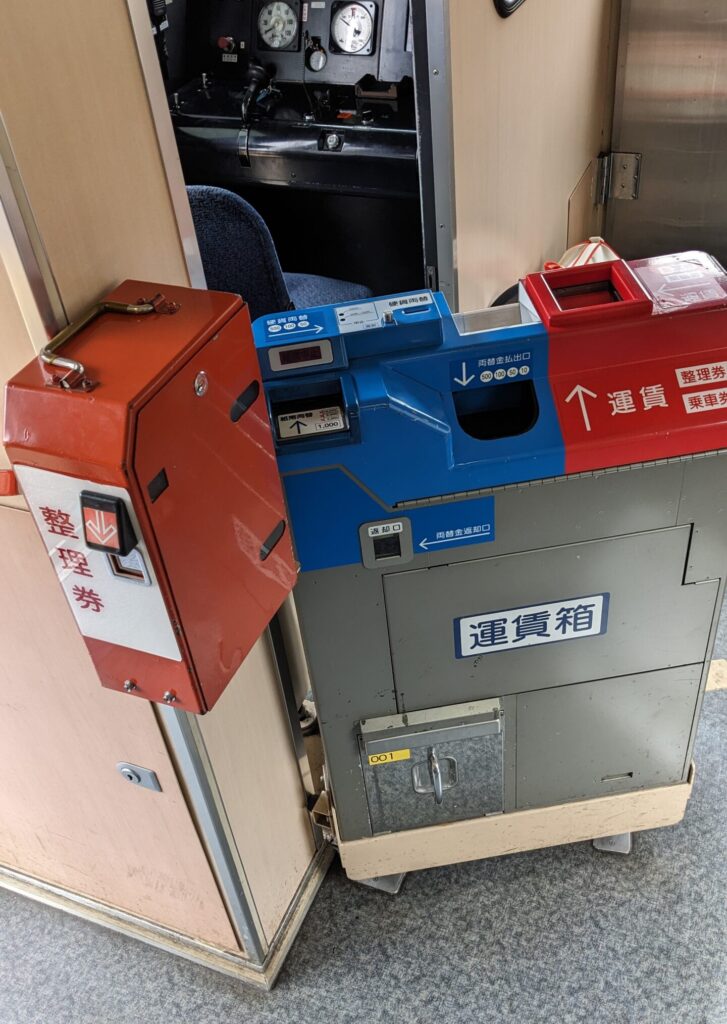
This time, the ticket machine (整理券: left) is actually next to the payment machine (運賃箱 middle and right), where the blue part actually exchanges coins for bills, and you put in your ticket and your payment in the red part. You would first get on the train and pull out the ticket (left). If you needed coins to pay, you should exchange money in advance (middle) so you could get off smoothly (train riding etiquette even in rural Japan!). And to get off, deposit ticket and fare (right).
Have a great ride!
(The pictures for this article come from a trip on JR Shikoku’s Tokushima “Blue Line” between Awa-Ikeda in Miyoshi City and Awa-Kawashima in Yoshinogawa City.)

コメントを残す